Behind the Scenes of the Film—"Costa Rica: Pura Vida, Pura Tierra"
Written by Bacha Coffee | 3 mins |
Filmmaker Fraser Morton explores the relationship between Costa Rica's coffee, land, and people, and the philosophy that unites them all.
.jpg "Bacha-Coffee---Journeys-to-the-Source---Costa-Rica---Filming-at-plantation,-grecia-region-(6)")
I had already been in Costa Rica for a week by the time I rolled into San José to begin filming the next chapter of
Journeys to the Source.
I had spent the previous days on the Pacific coast in Nosara, exploring and enjoying some much-needed downtime after a busy year of travelling and filming. Each morning I ran along long golden beaches where jungle spilt almost to the shoreline. I was there for a writing retreat, so my days were simple. Run. Write. Eat fresh food. Swim. Repeat.
By the time I left Nosara, I felt rested, recovered, and with a sense of re-imagination that inevitably comes from immersion in pristine nature. Aside from time and space to write and reflect, what struck me immediately about this slice of Costa Rican coastline was that it felt untouched and undefiled by unscrupulous development that has blighted so many tropical shores worldwide. This was different. This was protected land.
There were no great walls lining the beaches, no sprawling resorts fighting for the shoreline. Costa Rica’s strong commitment to conservation was visible from my first morning run. I passed signs that read, “Área protegida” (Protected area) and “Protejamos nuestras playas” (Let’s protect our beaches). Forests crowded the edges of towns. Wildlife appeared everywhere. Nature was abundant. Human presence and infrastructure snaked around the edges of the environment, in harmony with nature.
When it came time to leave Nosara, I boarded a tiny propeller plane back to San José and discovered I was the only passenger. From the window, Costa Rica stretched beneath me in a thick, tropical blanket of green. Verdant hills rolled towards the horizon, cut by rivers and dotted with settlements, while volcanoes pierced the banks of cloud. After a week experiencing the country at ground level, I could finally appreciate it from above.
San José brought me abruptly back to Earth. The capital felt raw and energetic after the tranquillity of the coast. I met up with Rüdiger Freytag, Bacha Coffee’s Head of Coffee Procurement and Production. The following morning we piled into a 4x4 and began climbing towards the volcanic highlands. Our destination was Volcán Azul, where a family has been growing coffee for seven generations.
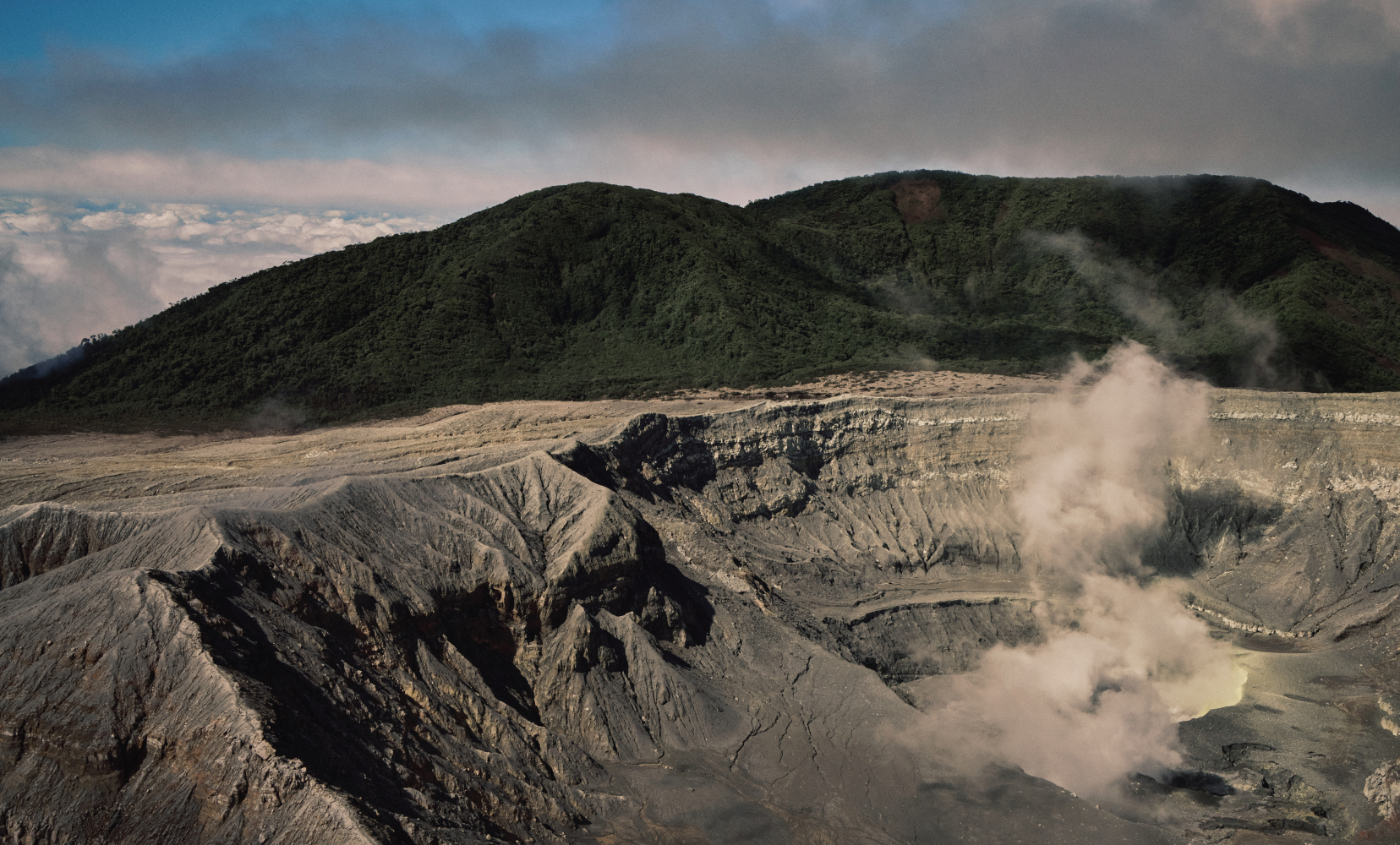
The land of volcanoes
The farm sits on the slopes of Poás Volcano, a great stratovolcano rising above Costa Rica’s central highlands. Its crater contains an acidic turquoise lagoon, and great plumes of white vapour drift from its interior. Volcanic soils, altitude, cool air, forest and moisture combine to create conditions in which Arabica coffee can flourish. This was where we would spend the coming days.
We stayed in a small family-run guesthouse in the mountains. Mornings began with fruit, breakfast, and inevitably, some of the world’s finest coffee. Then we would load the vehicles with equipment and head out to film. I have spent much of my career documenting conservation, so I arrived particularly interested in the relationship between agriculture and the natural world. Documenting coffee has increasingly become part of that journey for me through making these films.
The first thing that struck me at
Volcán Azul was how little it looked like a tract of land dedicated to agriculture. One of the farmers who manages Volcán Azul with his family explained that more than 60 per cent of their wider landholdings are dedicated to conservation. At Volcán Azul itself, around 220 of the farm’s 300 hectares are forest. The family has been growing and exporting coffee for almost two centuries. He is the seventh generation on his father’s side. His children represent the eighth.
Getting to know this family was one of the great pleasures of the shoot. We ate together. Lunches and dinners took place in their home around a shared table, with family members coming and going, talking about the farm, coffee, conservation, philosophy and life. Their pride in their craft and affection for the land were infectious.
They spoke about their ancestors and the responsibility they feel towards them. They remembered growing up during harvest season, surrounded by coffee pickers, following their father around the farm. Coffee had always been there. It was simply part of life. Their father began protecting forests in the early 1980s, at a time when agricultural expansion was still driving deforestation in Costa Rica. Decades later, that philosophy has developed into a much broader experiment in how coffee can coexist with a thriving ecosystem. The forest also plays a role in the coffee itself.
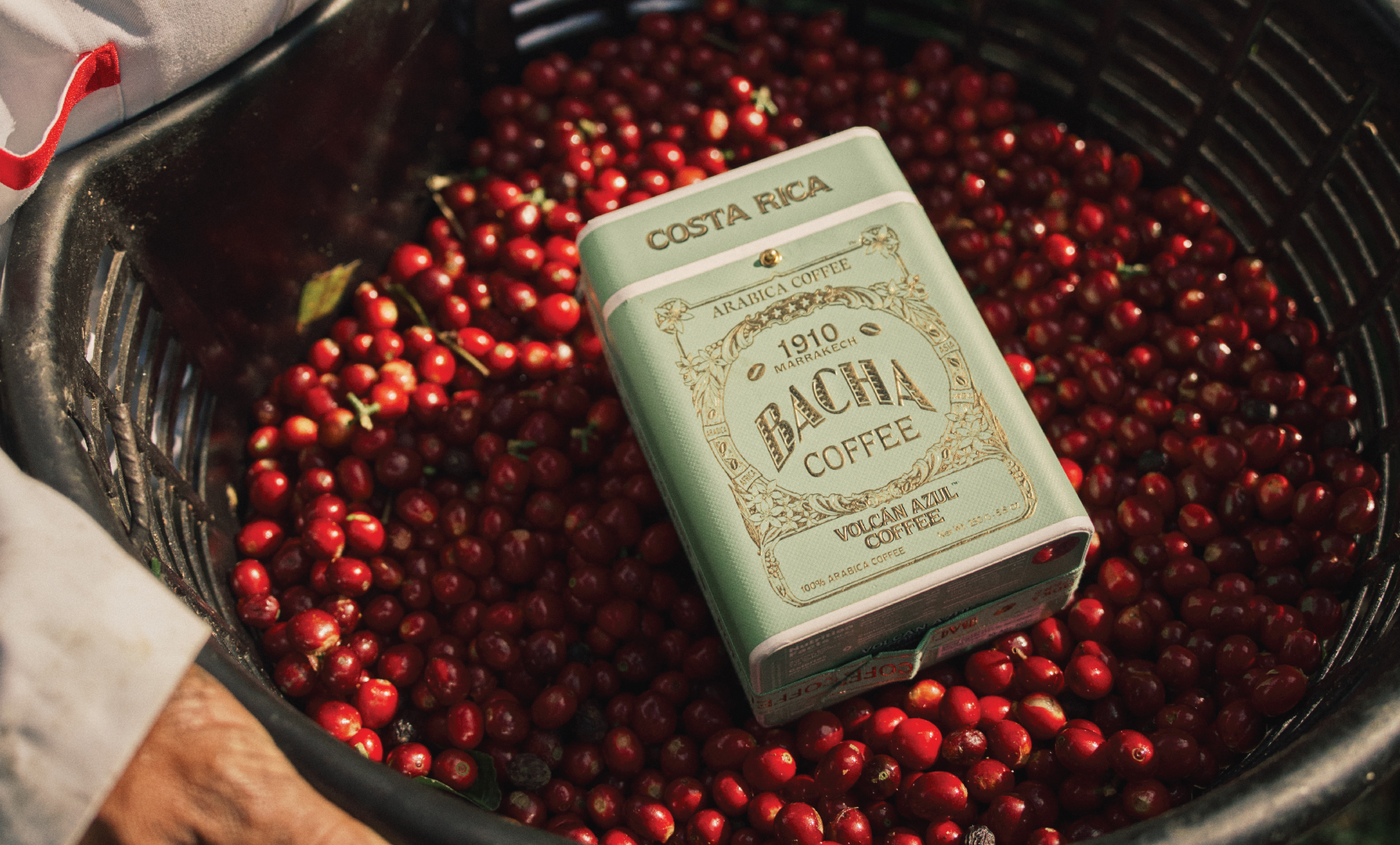
One farmer explained how the surrounding tree cover helps lower temperatures and retain moisture across the farm. Coffee cherries mature more slowly in cooler conditions, developing greater density and complexity. Within the plantations, the family is introducing more shade trees, protecting ground cover, reducing herbicide use and encouraging the return of insects, birds and microorganisms. Here, coffee grows among hundreds of plants, not as a monocrop. Standing there, smelling the soil and listening to birds calling from the forest, the logic felt simple. Treat the land well, and it gives something back.
Costa Rican craft & coffee culture
The processing of coffee at Volcán Azul was fascinating to watch. Everything moved with a quiet precision.
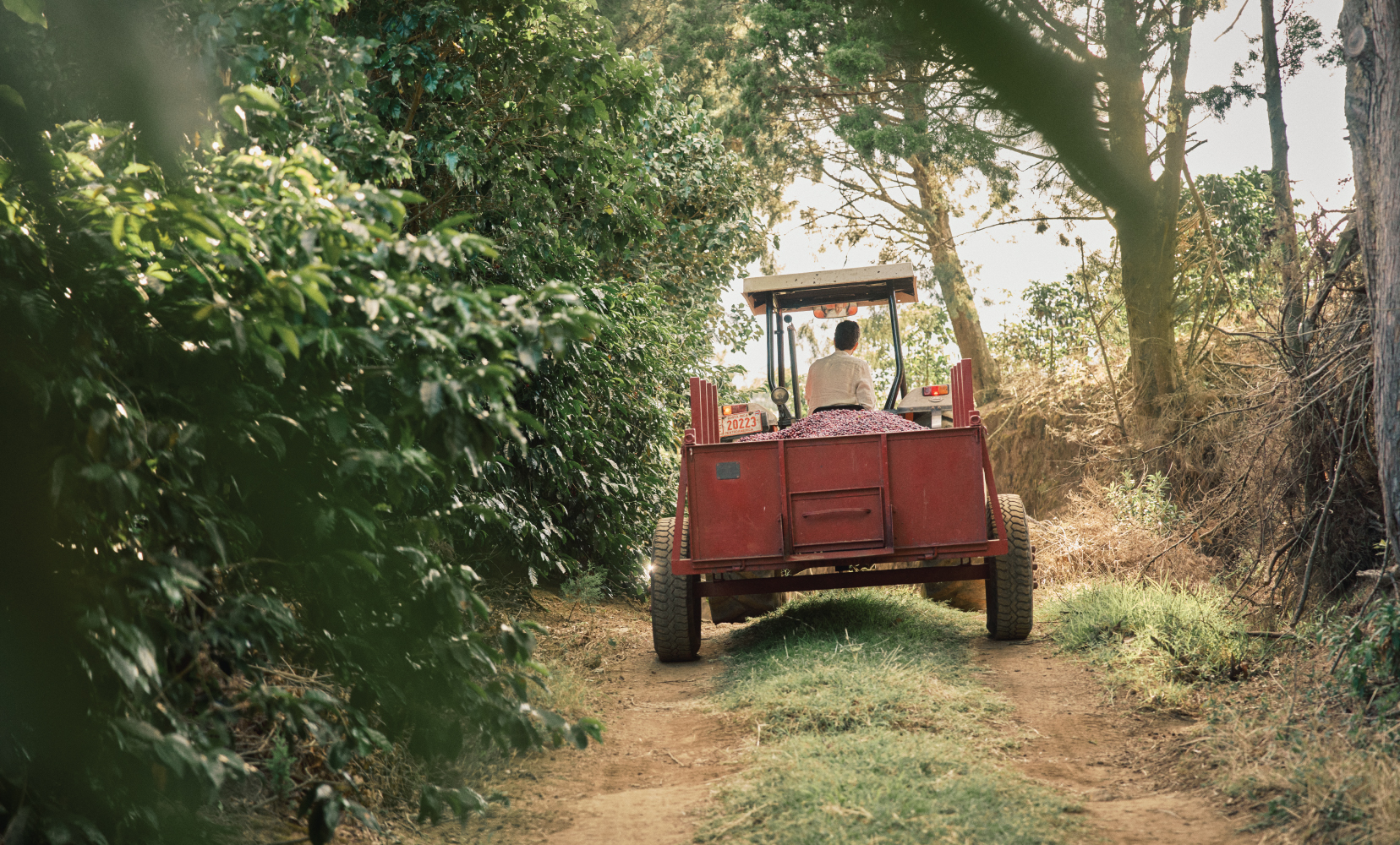
We followed ripe cherries from the moment they were plucked from the trees. They were collected, weighed and transported by tractor down through the farm. At the mill, another sequence began. Cherries were sorted and processed. Beans moved through washing stations and onto drying areas. Honey-processed coffees retained part of the fruit’s sticky mucilage before drying. Other coffees were fully washed. Every decision eventually appeared somewhere in the cup.
Watching the entire process unfold felt like watching a carefully rehearsed dance. Everyone knew their role. Hands moved quickly through familiar tasks. Tractors appeared when they were needed. Cherries arrived. Coffee moved onward. Generations of accumulated knowledge seemed embedded within the rhythm of the place. There was pride in the work.
There is a great deal of conversation today about what responsible agriculture should look like. Here I could simply observe people doing it. The farm was productive, meticulously run and deeply connected to the landscape surrounding it. Even the apparent messiness had purpose. Ground cover protected soil. Different root systems interacted beneath our feet. Insects had natural predators. Trees created shade. The forest held moisture and moderated temperature. The coffee plantation existed within an ecosystem that had been given room to breathe.
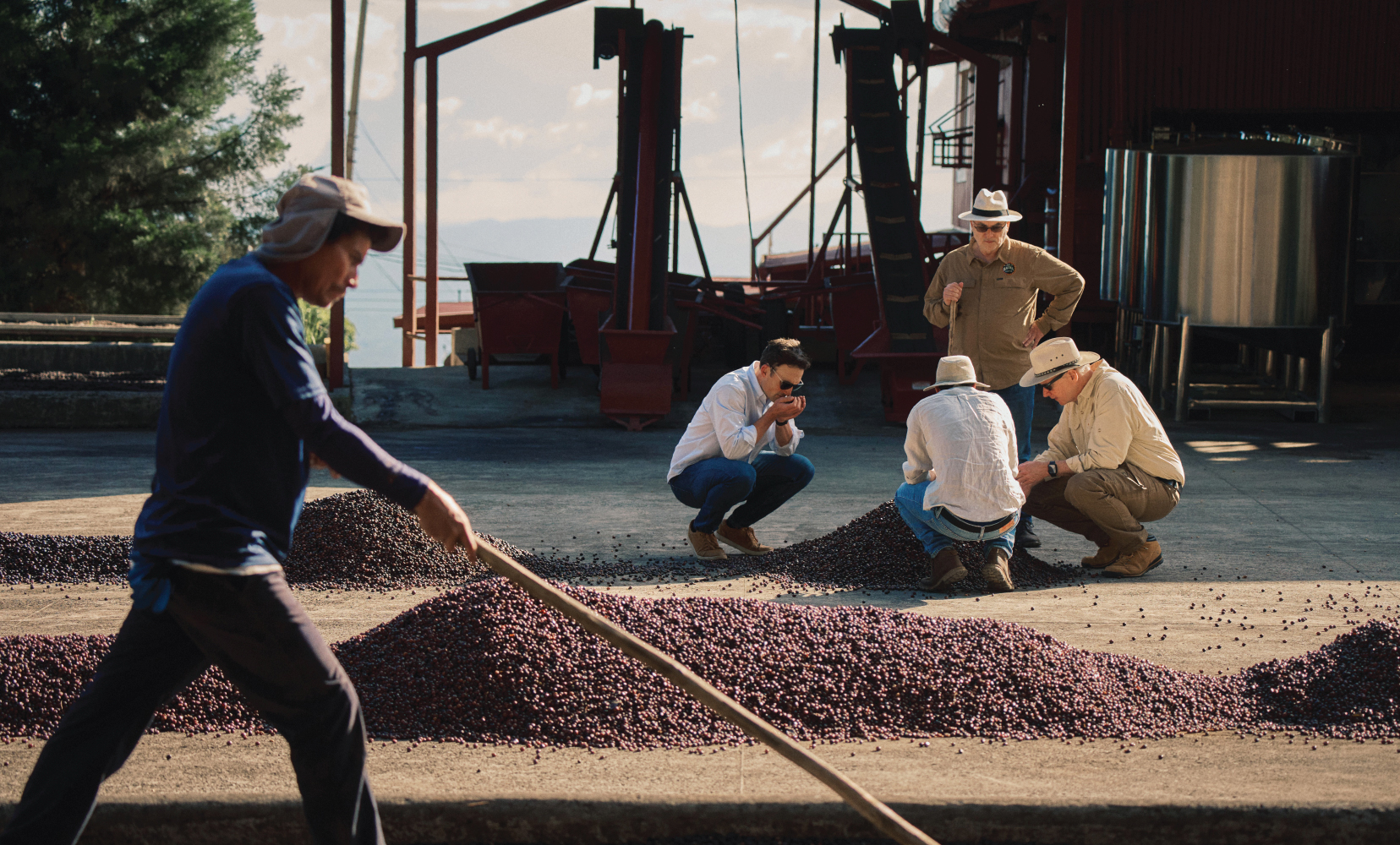
Travelling with a coffee expert
This was my second journey with Rüdiger. Somewhere between Ethiopia and Costa Rica, he had become a friend as well as a colleague. Travelling with him has also become an education in coffee.
Rüdiger has spent years visiting farms around the world, tasting harvests and building relationships with producers and farmers. Watching him work has taught me to pay attention to details I would once have missed completely.
He walks slowly through plantations. He inspects cherries. He asks questions. He tastes constantly. At the cupping table, a tiny change in flavour can send him back through the entire story of a coffee. Ripeness. Altitude. Variety. Fermentation. Drying. Processing. Somewhere along that chain lies an explanation.
I have also begun to understand how much quality coffee depends upon relationships. Coffee passes through many hands before it reaches our cups. At Volcán Azul, the relationship between farmer and roaster has developed through conversations, visits, tastings, experiments and time spent together. That relationship carries trust.
It also creates a cycle around quality. When farmers know what a coffee buyer is searching for, they can experiment with varieties, cultivation and processing. When Rüdiger regularly returns to the farm, he understands the challenges of each harvest and the decisions behind the flavours he eventually tastes.
The transaction has a face. That matters. Business shapes the world around us. The things companies choose to value eventually find their way into landscapes, working practices and the products we consume. Spending time at the source makes those connections difficult to ignore. It is one reason I enjoy making these films. There is something deeply satisfying about documenting people who care about producing quality produce, while honouring the environment and culture.
.jpg "Bacha-Coffee---Journeys-to-the-Source---Costa-Rica---workers-at-the-farm-sorting-out-coffee-cherries-(85)")
Pura vida
Over the course of the week, we filmed the entire journey of these coffees.
We walked the volcanic slopes. We tasted cherries straight from the branches. We watched tractors carrying the harvest through the farm. We filmed washing, honey processing and drying. Finally, we followed the coffee to the cupping table, where Rüdiger and the farmers tasted the results together.
Somewhere during all of this, the phrase pura vida began to make more sense to me. You hear it everywhere in Costa Rica. It can mean hello, goodbye, everything is good, enjoy life. Spend enough time there, and it starts escaping any useful translation.
At Volcán Azul, I began to recognise it as an attitude. I saw it around the family table. In the patience required to grow coffee at altitude. In the decision to leave hundreds of hectares of forest standing. In the workers moving through the harvest with practised ease. In the willingness to accept a smaller yield from a coffee tree when the remaining cherries could offer greater quality. There was a calmness to the place. The more time I spent with the farmers and in the landscape, the more Costa Rica began to feel like a new friend. Someone who enjoys good food and quality coffee, loves nature, takes pleasure seriously and understands that those pleasures depend upon caring for the place that provides them.
It made me think about our appetite for speed. We have become extraordinarily good at producing enormous quantities of things cheaply. Clothes. Food. Coffee. Almost everything we consume can be made faster and pushed further. Spending a week on these volcanic slopes reminded me of the value of another rhythm. Growing exceptional coffee requires attention. It requires healthy soil, knowledge, relationships, patience and people prepared to care about details that most of us will never see. There is meaning in that.
On our final days, I watched Rüdiger and the farmers cup the coffees we had spent the week following. Eventually, these coffees would continue their journey to Marrakech, where another group of people would take responsibility for roasting them before they travelled onwards around the world.
I left Costa Rica with a much deeper appreciation for a country I had come to feel connected to in a surprisingly short amount of time. Most of all, I left thinking about the soil beneath those coffee trees, the forest surrounding them, and seven generations of one family learning how to work with both.
Perhaps that is what I will remember whenever someone says pura vida.
Good land. Good people. Good coffee. And enough patience to allow all of them to flourish.