Why Does Slow-Roasted Coffee Taste Better?
Written by Bacha Coffee | 3 mins | Coffee Knowledge
Discover how our artisan roasting techniques unlock richer, more flavourful notes in every Arabica cup.
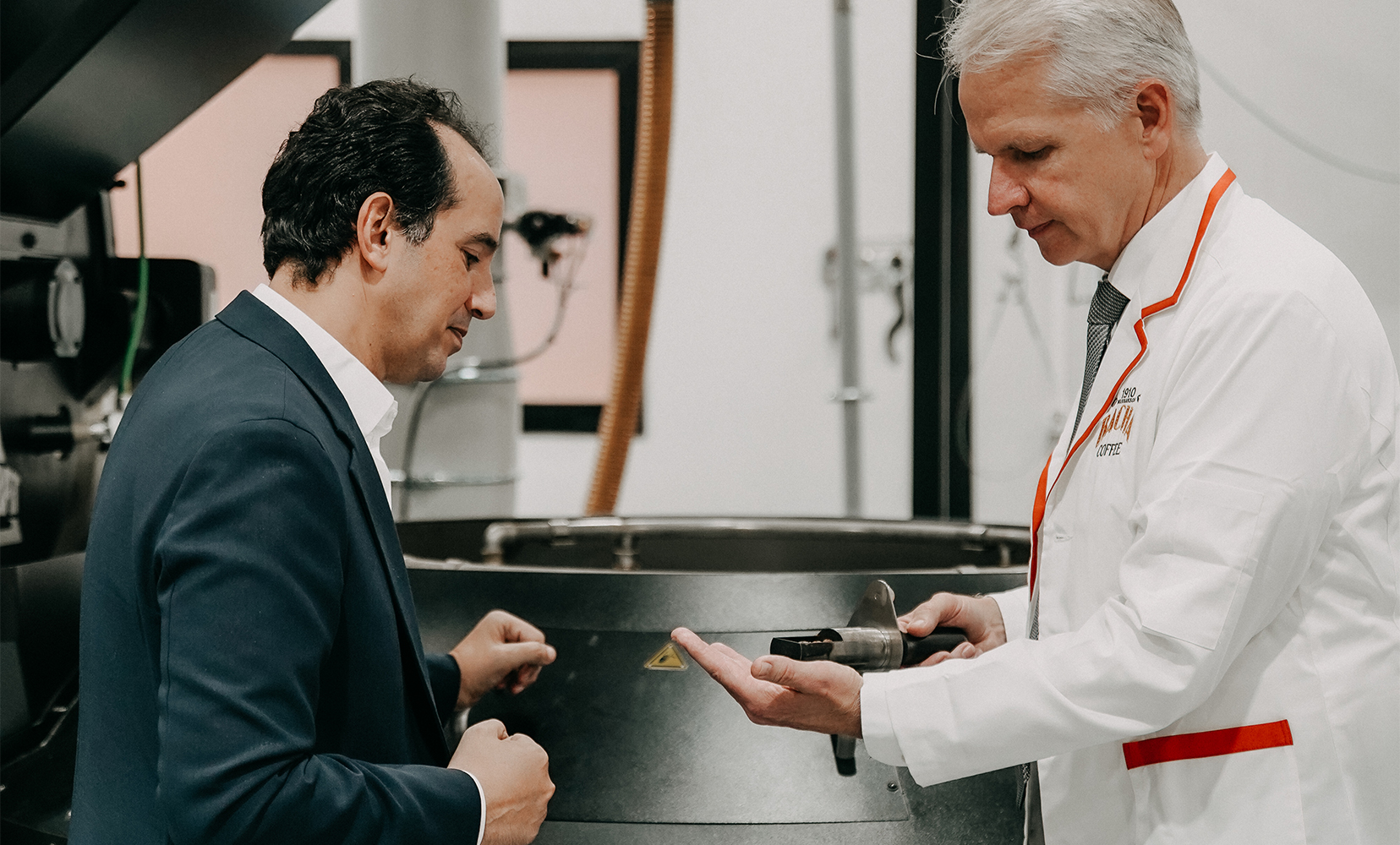
At Bacha Coffee, roasting is an art and a science, requiring precision, passion, expertise and patience to develop the characteristics of each and every harvest and create just the right method to bring out the best in each bean. Our artisanal, small-batch slow-roasting process has been perfected over the years in Marrakech, allowing us to uncover a unique recipe for each of our 200 varieties of 100% Arabica specialty coffee. This careful craft ensures that the sun, soil, and rain each bean has known come through in every cup.
Our way of slow-roasting takes time and is more expensive, yet we know this is the only way to reveal all the best flavours within the bean.
A brief overview of roasting
Although many factors influence the flavour of coffee, roasting is perhaps the most influential.
When the Coffea arabica bean is roasted, it begins to change in form. Although knowing when the bean is ready is a bit of art and science as mentioned earlier, a good Coffee Master looks for signs to measure whether the bean is ready:
- Crack of the bean
- Colour change
- Bean arrives at the required temperature
- Aroma
New flavours are born
Within each bean resides a myriad of exquisite flavour characteristics from the land where it was cultivated. 80 flavours, in fact, have been identified inside unroasted green coffee beans. During roasting, however, heat can introduce new flavours as it triggers a reaction between the bean's reducing sugars and amino acids — a process known as the Maillard reaction, which produces complex aromas and taste compounds. During this caramelisation process, beans have been known to develop more than 800 flavours. Generally, as the bean is exposed to heat, acidity can diminish; the darker the roast, the less acidic it may taste. The roasting process must be interrupted at exactly the right time to allow for flavours to remain inside the bean. Coffee beans produce a lot of CO2 gas after roasting, so coffee sachets generally contain a one-way valve to prevent oxygen from entering to keep it fresh and flavourful.
Most coffee companies “shock roast” their beans in industrial roasting facilities roasting at 400°C - 600°C for two to four minutes. Unfortunately, this kind of roasting actually burns the outside shell and does not give the coffee enough time to develop its flavours and aromas.
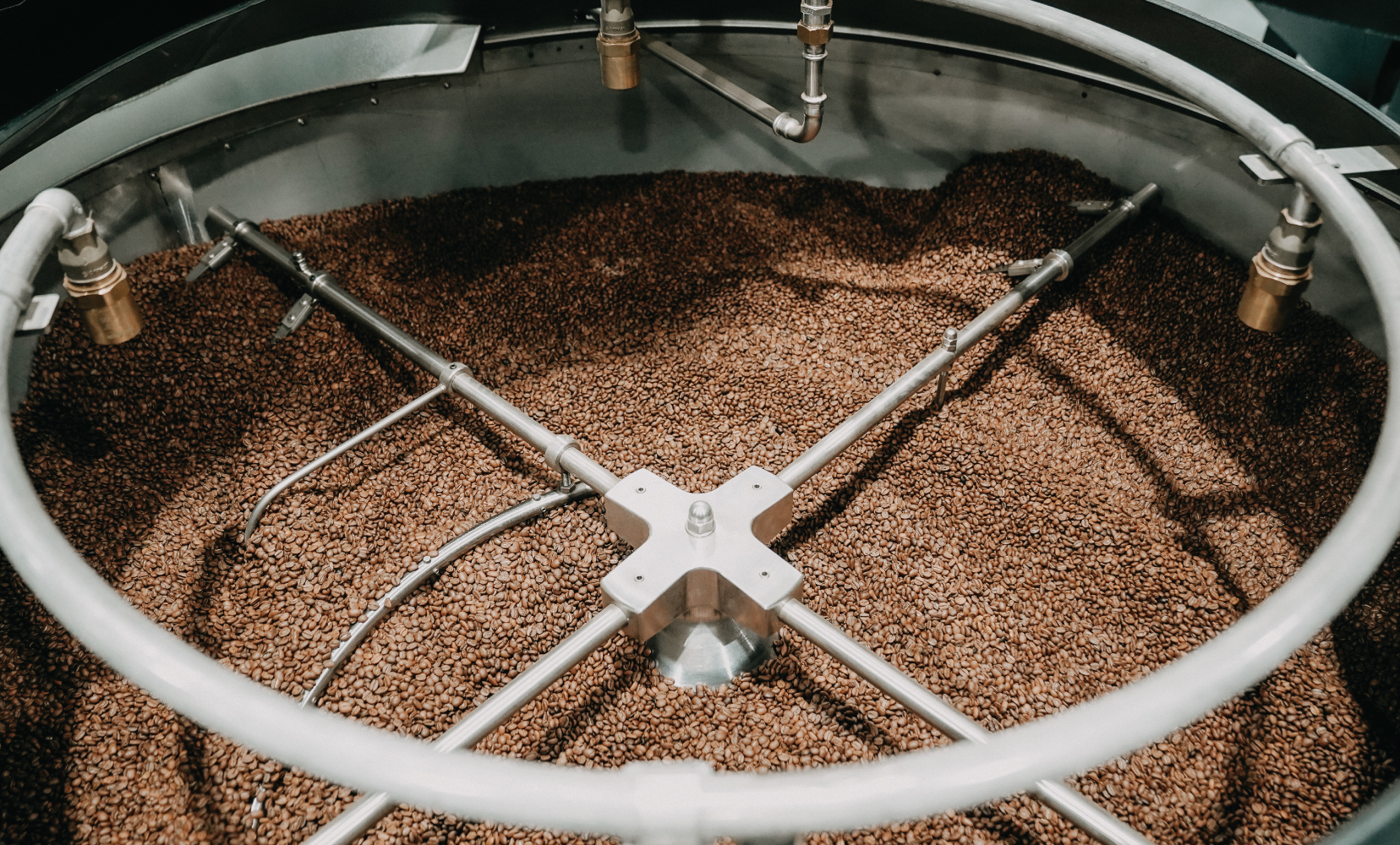
At Bacha Coffee, we roast at 200 °C - 220°C for 14 to 20 minutes. Then, we cool down the beans with a minimum amount of cool water quenching and a cooling fan for around two minutes.
“Slow-roasting in small batches takes more time than industrial methods—and is therefore more expensive— but we believe it’s the only way to fully extract the unique characteristics and flavour notes that ultimately reveal themselves in the cup,” says Rudiger Freytag, Head of Coffee Production at Bacha Coffee.
A Bacha Coffee roast for every harvest
For over a century, we have been roasting the Coffea arabica bean, studying its complexities and pin-pointing the perfect methods to release its inner elegance. Our beans are roasted at low temperatures in drum roasters using traditional slow methods.
We have a roasting profile for each coffee that has taken a tremendous amount of time and expertise to develop, and we follow it precisely to ensure consistency. The softer the bean, the harder it is to develop the right roasting profile. Our Monsoon Secret Coffee from India, for example, is an exceptional coffee that undergoes a very unique process to give it its distinct character: the beans are actually exposed to the monsoon for eight to ten weeks and then roasted. The beans, slightly swollen in form, have very little acidity and result in a sweet aroma, a fruity, delicately herbal flavour and a full body.
Our Black Pearl Coffee, on the other hand, a unique mild, spicy coffee from Kenya with notes of cracked cocoa, is created from a rare “pearl bean”, which grows when a coffee plant lacks nutrients (usually at the end of the branch where nutrients are not as abundant) and only forms one bean, the so-called "pearl" bean, named for its shape. Though slow-growing, it’s admired for its resilience and rarity, and Bacha Coffee master roasters have to attend to it with particular care.
Because each coffee variety requires a different degree of roasting, Bacha Coffee harvests are separated to ensure the best quality. As technology develops, roasting techniques may evolve, yet the Bacha Coffee commitment to excellence will always be closely tied to celebrating the time-honoured art of traditional coffee making.